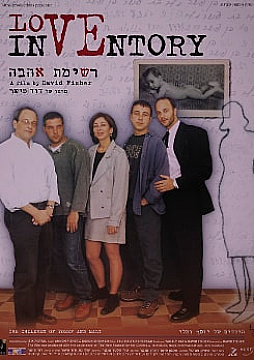
Love inventory
Tangled web of family relationships as siblings search for lost sister
Tangled web of family relationships as siblings search for lost sister
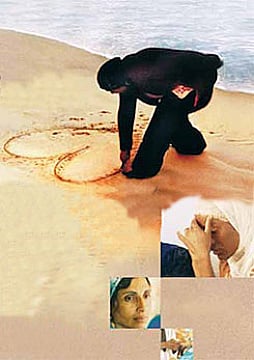
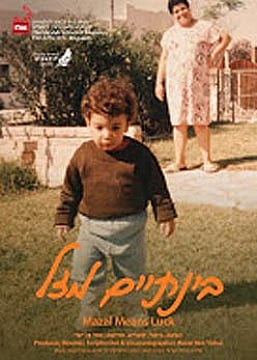
She was 17 years old when she came to Israel alone, having lost her family in the Holocaust. The year was 1949. She met a young man - he too had lost everything in the gas chambers. Two strangers, two survivors, each carrying the weight of an erased family, found each other in a country that was itself only months old, still finding its own footing. They clung to each other, two young, lost people in a strange and troubled land, trying to build something out of nothing. They got married and soon after were expecting a baby, a first thread of continuity after everything that had been severed. At 18, she gave birth to twins, a boy and a girl - a new beginning in their new homeland. Two children, born into a country still absorbing waves of refugees, still improvising its hospitals and its systems, still finding its way. She was shown her baby boy and was told the little girl was sick. It was the kind of thing a young mother, alone in a foreign system, in a language she barely spoke, had no way to question. A few days later she went home with the boy; the little girl was supposed to follow. Then, on a visit to the hospital, she was bluntly told the girl had died and had already been buried. No time to grieve properly. No time to ask why. Just a fact, delivered flatly, final. There was no body. There was no document. There was nothing. The very young woman went home dejected and disheartened. There was nothing the young couple could do but go on with their lives - and so they did, the way so many survivors learned to do: forward, without looking back too closely. After a while, they stopped talking about it. The silence became its own kind of survival strategy, a way of sealing off a wound no one had the tools to treat. The woman was my mother. The man was my father. The little girl was my would-be sister. The film is an intensive search for a little girl, a grown woman by now, and an attempt to solve the mystery of her disappearance. It peels back my life, my parents' lives, and traces the state of Israel from the chaos of the 1950s to today, a young nation's growing pains reflected in one family's private catastrophe. This film is a personal fight against a state conspiracy. It is a bold attempt to break taboos never touched before. It is a cry for justice, one meant to pave the way for other families claiming their right to uncover the truth about children who vanished from hospitals and disappeared into silence.
The film received critical acclaim. It was screened at international film festivals, broadcast on television networks around the world, released theatrically in Israel and Europe, and is included on the list of required viewing for documentary film studies at the Academy.
A riveting documentary both thematically and technically that renders the lines between fictional and non-fictional cinema almost irrelevant. . . a gem that makes the Israeli cinema proud.
Emanuel Levy, VarietyAn emotional and awe-inspiring film… Don’t miss it!!
Yehuda Stav / film criticA film that gave the festival its moment of grace… A film that breaks the boundaries between documentary and narrative cinema
From the jury notes, Jerusalem Film FestivalThe best film screened at the Forum, Berlin Film Festival…
Hans-Jürgen Rother / Frankfurter Allgemeine Zeitung, GermanyAn intimate, personal film, the making of which requires great courage, about four brothers and one sister who argue, laugh, and cry in front of the camera…
Ingela Brovik / Skånska Dagbladet, SwedenAn amazing achievement in intimate documentary filmmaking…
Barry Davis, Jerusalem Post
A beautiful, personal, revealing, and moving film…
Amir Kaminer / film criticA gift to the film festival… A moving and delightful story…
Irit Shamgar / film critic
The theme son - The Son of Yossef and Mali / Amnon fisher
AWARDS:
Jerusalem International Film Festival, 2000 – Wolgin Award for Best Documentary Film.
Israeli Academy of Film, 2000 – Best Documentary Film.
FESTIVALS:
Berlin (Forum section), Jerusalem, INPUT Conference, Houston, Munich, Seattle, Hong Kong, Bangkok, Boston, Pennsylvania, Philadelphia and Manila.
BROADCAST:
Channel 8 – Noga Communications
YES Docu
ARTE, as part of Grand Format, France and Germany
PBS, as part of Independent Lens, the U.S. public television network.